

The closing day did not dilute the ambition of the Congress; it disciplined it. Sustainable forest management in Africa will endure only if it is rights-based, measurable, investable, and collectively owned. Zámba did not conclude as an event—it concluded as a mandate.
Indigenous leadership: from consultation to co-decision
The morning opened with voices from the ground led by Annah Agasha, Deputy Director of FSC Africa. In her opening remarks, Agasha emphasized that Indigenous Peoples are not peripheral stakeholders in Africa’s forest agenda; they are its primary guardians.
The discussion highlighted FSC’s significant investments in diverse African nations and explored how these localized efforts can be scaled to create a cohesive, continental impact on forest governance and economic development.
Globally, Indigenous Peoples represent approximately 6.2% of the population yet safeguard nearly 80% of global biodiversity. In Africa, where 4–5% of the population is classified as Indigenous, their ecological contribution is foundational, yet often structurally under-recognized. Agasha noted that the strengthening of Free, Prior and Informed Consent (FPIC) within FSC’s Principles and Criteria has made the governance approach more inclusive, moving beyond mere consultation to sensitive, rights-based systems.
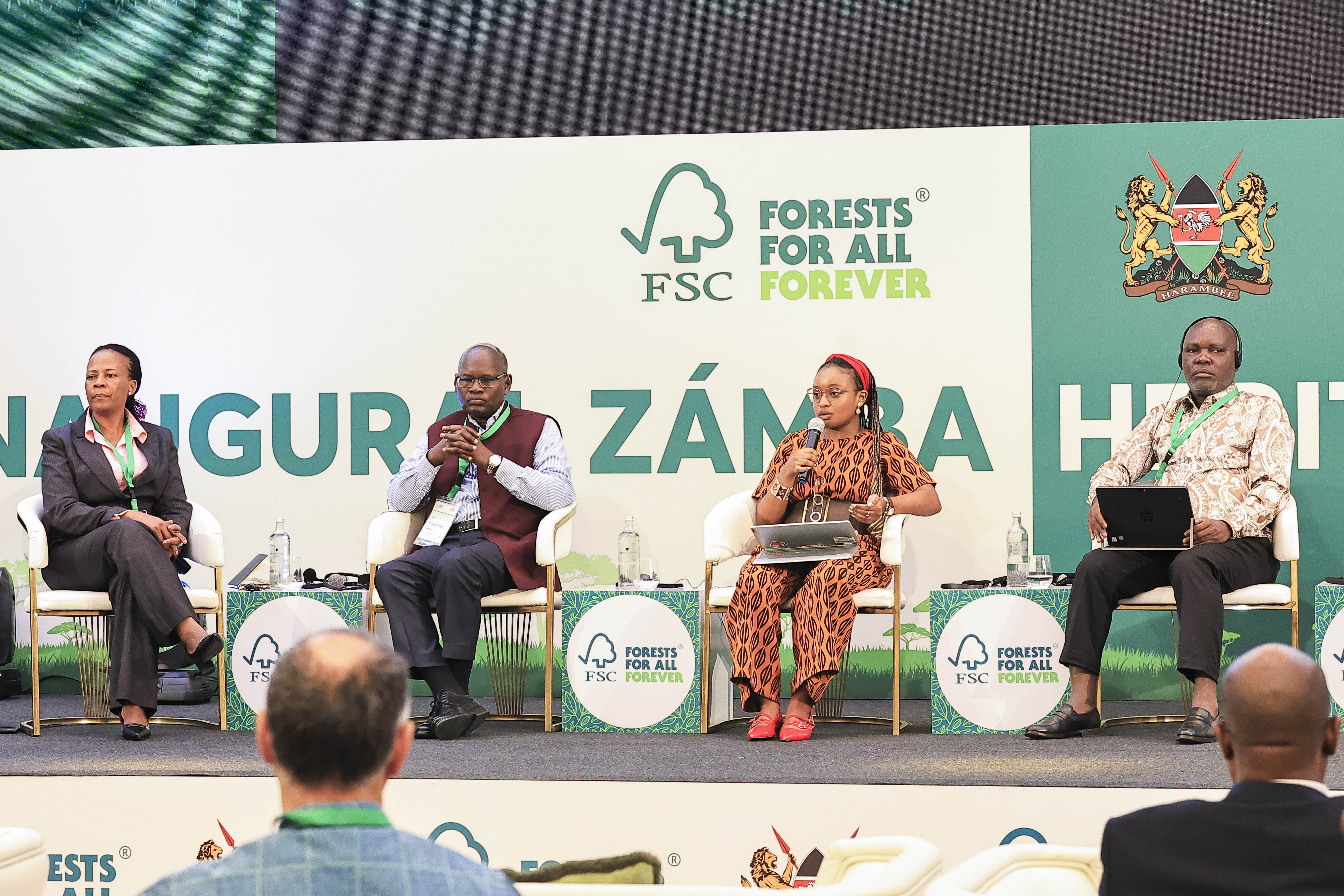
A following panel featured:
- Professor James Ole Kiyiapi, FSC Africa Advisory Member
- Cindy Kobei, Ogiek Community leader and Human Rights Lawyer
- Moussele Disseke Guy, Representative of the Central African Indigenous Rights Group (RAPALEAC)
The panel underscored that sustainable management cannot succeed without secure land tenure and equitable economic participation. Professor Kiyiapi reminded delegates that forests are not simply production units: “They see the forest as a source of life,” he reflected.
Cindy Kobei urged African governments to accelerate formal recognition of groups like the Ogiek and Baka, while Moussele Disseke Guy cautioned against reducing FPIC to procedural "box-ticking." The shift was clear: Indigenous Peoples must move from being consulted to being the co-architects of Africa’s forest economy.
Scaling sustainable forest Management in Africa:
Lieske Van Santen (FSC Global Network Director) and Marc Jessel (Managing Director/Chief Engagement Officer, FSC) joined a high-level panel focused on scaling up sustainable forestry across the continent. Facilitated by Annah Agasha (FSC Africa Deputy Director), the session served as a platform to unveil FSC’s strategic contributions to responsible forestry. 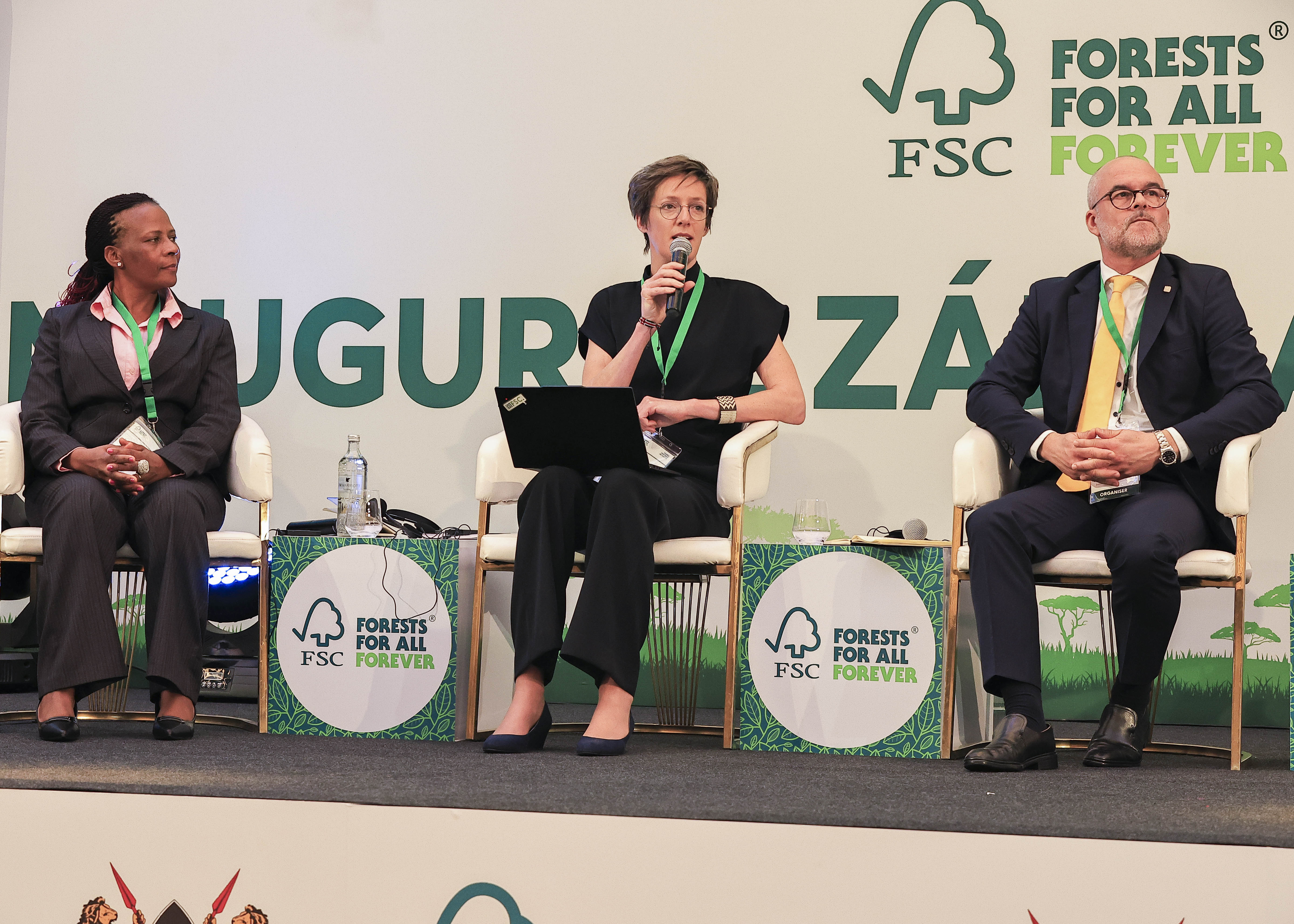
The FSC Africa Zamba Heritage forest sustainability data hub: measuring change
Shree Nath, Programme Manager for Data & Innovations at FSC International, introduced the FSC Africa Zámba Heritage Forest Sustainability Data Hub—a foundational monitoring and evaluation platform designed to align impact measurement with the initiative's ambitions.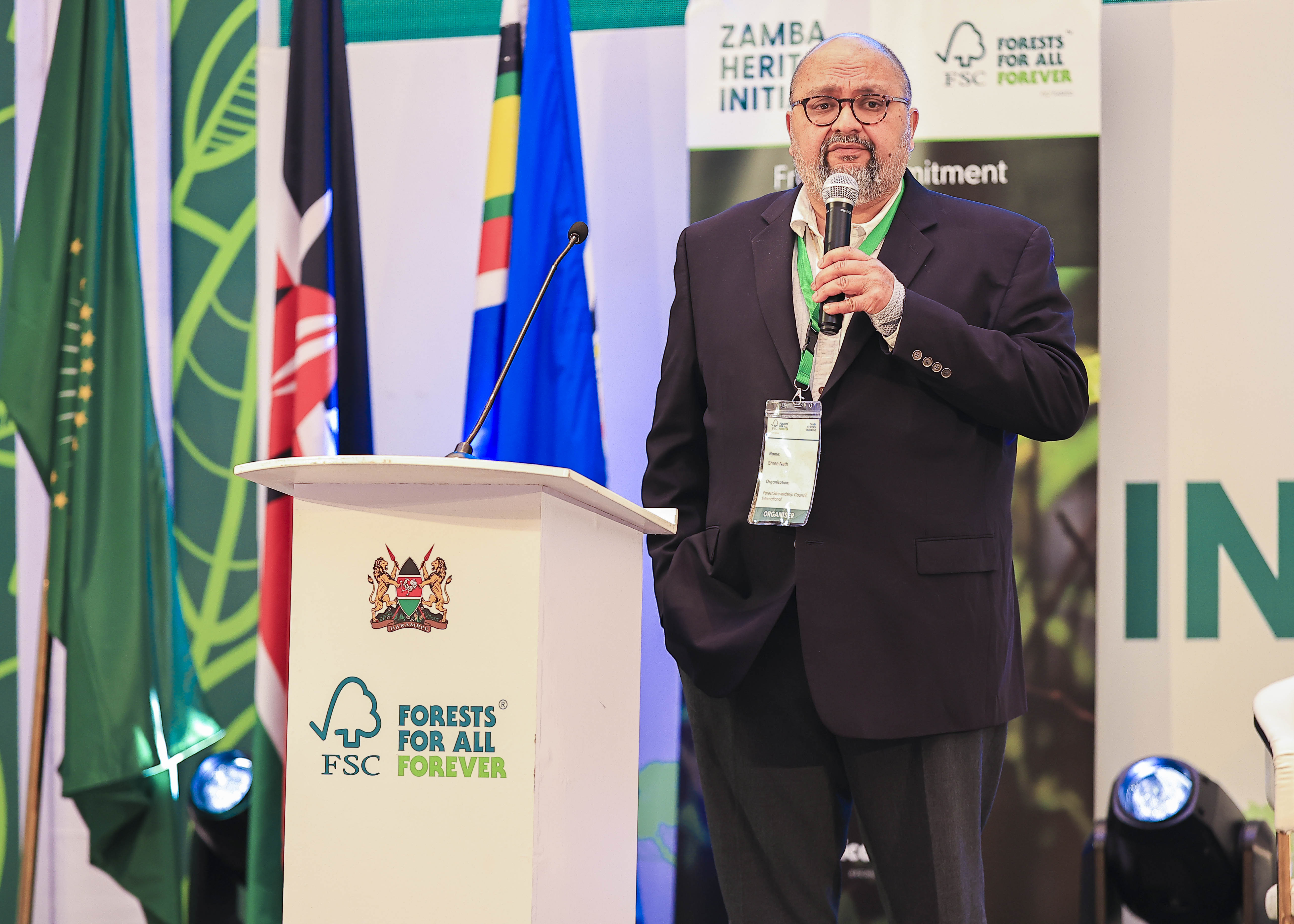
This is not a data repository for its own sake. Nath framed the Hub as a “minimum viable product,” a first step in a long-term collaboration with governments, academia, and the private sector to develop indicator frameworks relevant to Africa’s diverse ecological regions.
During the subsequent panel, Richard Fergusson (FSC Southern Africa Regional Coordinator) and Harrison Kojwang (Senior Affairs & Engagement Advisor, FSC) discussed the platform's scientific value. “You cannot manage what you cannot measure,” Fergusson stated, noting that overlaying governance structures with forest types and certification status enables both forward planning and accountability. Kojwang reinforced the institutional imperative: data must be translated into decision-ready information to shape policy and mobilize capital.
Partnerships formalized: from dialogue to alignment
In a defining moment of the closing session, Dr. Peter O. Alele, Regional Director of FSC Africa, announced formal partnerships that move Zámba from concept to implementation.
Memoranda of Understanding (MoUs) were confirmed with:
- National Park Agency of Gabon: A pilot national park certification initiative.
- Omar Bongo University, Gabon: Capacity building and academic collaboration.
- The Nature Conservancy (TNC): Sustainable Forest Management project development in the Congo Basin.
Liberia: Formally communicated its support and intention to endorse the Zámba Heritage Action Plan following internal review.
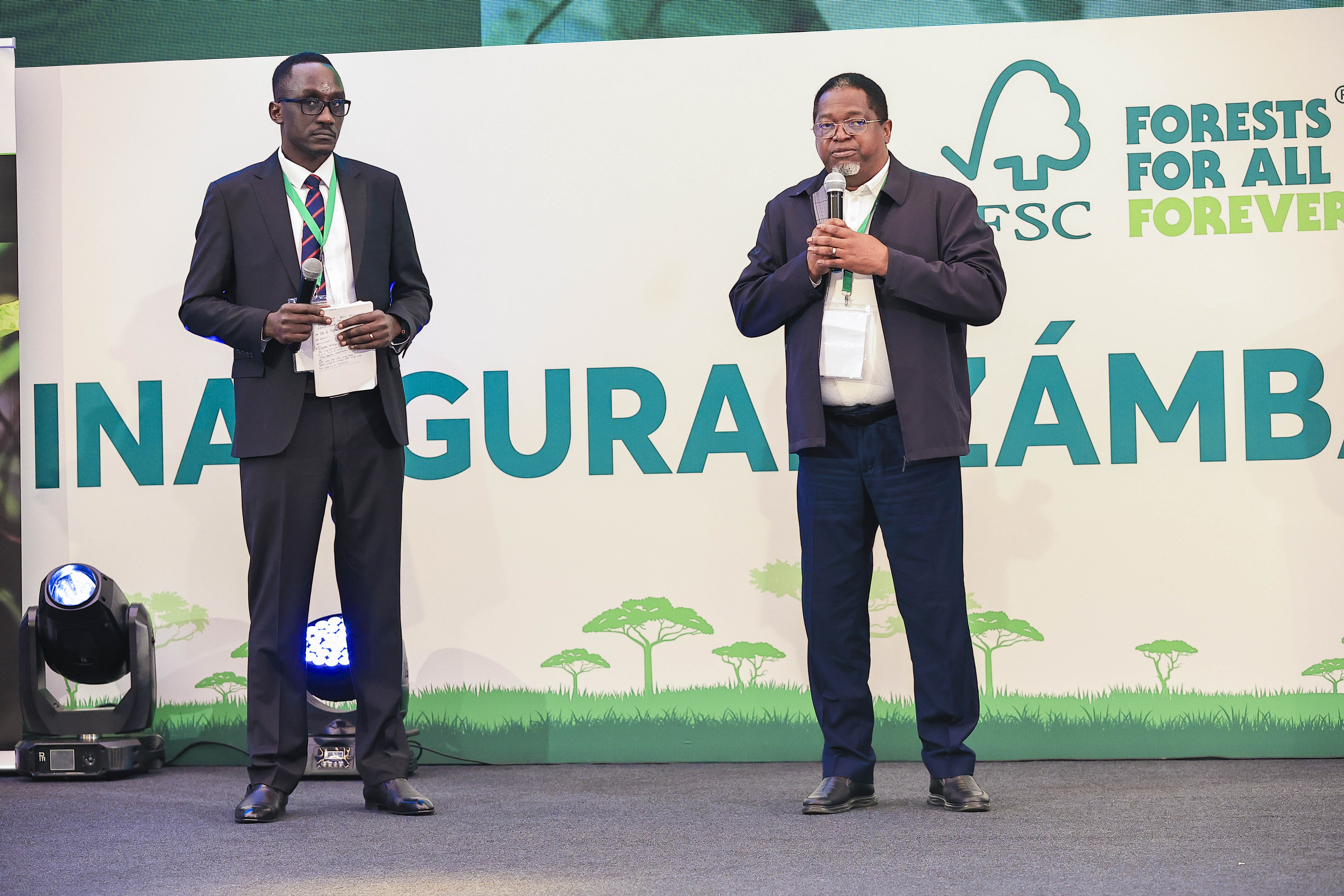
These were not symbolic gestures; they represented institutional alignment across government, academia, and international conservation actors around standards-based forest management.
The Nairobi declaration: a moral and political commitment
The Congress culminated in the adoption of the Zámba Heritage Nairobi Declaration. Harrison Kojwang noted that while final signatures await thorough internal examinations by member nations, the Declaration has been signed by three countries with no formal objections raised. It stands as a powerful moral and ethical commitment among participants to uphold the shared vision of the initiative.
Closing reflections: ownership, solidarity, and delivery
In her closing remarks, Dr. Subhra Bhattacharjee, Director General of FSC International, looked forward to the future. “The question is not what FSC will do next. The question is what we will do next.” She argued that solidarity is not just inspirational rhetoric, it is a strategic necessity.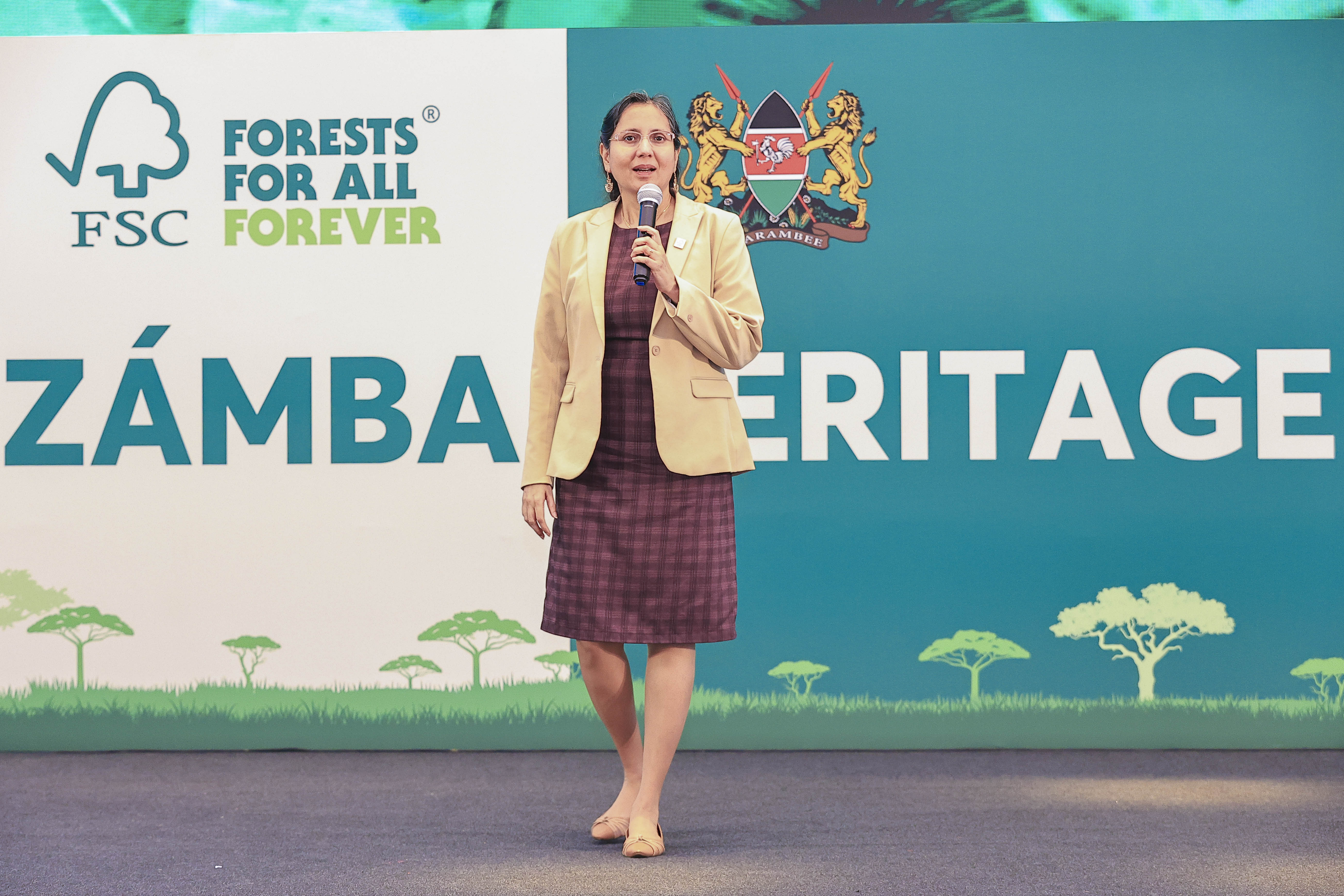
Across interventions from Ethiopia, Cameroon, Kenya, and beyond, a consistent theme emerged: Africa’s forests are central to economic resilience and cultural continuity.
A mandate, not a moment
Day 3 did not merely close the Congress; it converted momentum into structure.
With political leadership now aligned, a clear standards architecture has been established, supported by emerging data systems and formalizing partnerships. These pillars transform the Zámba Heritage Initiative into a decisive vector of change and a powerful lever for growth and sustainable development across Africa's forest sector.
What remains is disciplined execution. The next chapter will be written in hectares restored, certificates issued, carbon integrity strengthened, and communities empowered. Africa’s forest story is no longer being written elsewhere—it is being authored here.
Download Day 3 pictures here.
Day 3 videos
Day 3 summary of the Congress.
Day 3 livestream.